Kim Dae-jung Biography, Life, Interesting Facts
Birthday :
Died On :
Also Known For :
President (non-U.S.), World Leader
Birth Place :
Zodiac Sign :
Childhood and Early Life
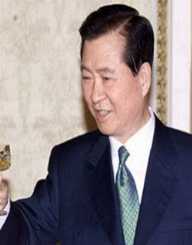
Kim Dae-jung, the 8th President of South Korea, was born on the 6 January 1924 on Hauido, a small island in Joella Province, Korea. He was the second of seven children. His family was prosperous middle-class farmers who moved to the port of Mokpo when Kim was at high school.
Education
After graduating top of his class at Mokpo Commercial High School in 1953, Kim Dae-jung did an economics degree at Kyung Hee University, Seoul.
Rise to Fame
Kim Dae-jung started his working life as a clerk in a shipping company, but with his business ability, he was soon heading his own freight shipping company which ran a fleet of ships. He also founded a daily newspaper. In 1950, when North Korea invaded, and the Korean War broke out (1950-1953), Kim was regarded as a reactionary capitalist.
Political Activism
In 1954, after the Korean War, Kim Dae-jung got involved in politics under the administration of Syngman Rhee, Korea’s first president. He was elected a representative to the National Assembly in 1961, but a military coup led by Park Chung-hee made the elections null and void. Kim was arrested and jailed, only being released in 1963 when democracy was restored. He then won a seat in the National Assembly, representing the area of Mokpo. He was re-elected in 1967 and became the opposition leader.
In 1971, Kim Dae-jung was a candidate for the Democratic Party in the presidential election campaign and narrowly lost out to Park. Because of his almost successful ran against Park, he was targeted and went into exile in Japan. Kim was kidnapped in Japan in August 1973 by intelligent agents of South Korea’s military government. The agents had orders to assassinate him and were in the process of carrying out their instructions when the mission was halted, due to the intervention of the U.S. ambassador in Seoul. Kim survived the attack but was banned from politics in South Korea.
He returned to South Korea and in 1976 was imprisoned for participating in the proclamation of an anti-government manifesto. By this stage, Amnesty International recognised Kim as a prisoner of conscience. In 1979, Park was assassinated, and Kim regained his political rights restored. There was another military coup in South Korea in 1980 led by Chun Doo-hwan.
When anti-government demonstrations started in Gwangju, Kim was accused of organising the unrest. He was charged with treason and sentenced to death. US President Ronald Reagan asked for clemency for Kim, and his sentence was reduced to 20 years. Two years later, Kim agreed to leave South Korea and was released. He settled in Boston Massachusetts where he worked as a visiting professor at the Centre for International Affairs at Harvard University.
Then in 1985, Kim Dae-jung went home to South Korea. When the first democratic presidential election since the 1972 coup was held in 1987, Kim ran and garnered 27 percent of the vote. He ran again in 1992 and lost to Kim Young-sam. After the loss, Kim left South Korea and went to England as a visiting scholar at Cambridge University. He returned home in 1995 and made his fourth run for the presidency in December 1997. He was duly elected and was sworn in on the 25 February 1998.
President of South Korea 1998-2003
South Korea was in the middle of an economic crisis when Kim Dae-jung became President. He presided over economic reforms and restructuring based on advice received from the International Monetary Fund. He engaged with North Korea and was involved in the first North-South presidential summit. The debate calling for North Korean restraint in detonating of nuclear weapons was ongoing during his presidency. He is also remembered for his Sunshine Policy concerning North Korea. At the completion of his presidential term, Roh Moo-hyun succeeded him in 2003.
Awards and Achievements
Kim Dae-jung was awarded the Novel Peace Prize in 2000 for his work for human rights and democracy in South Korea and East Asia, particularly his engagement with North Korean.
Personal Life
Kim Dae-jung's first wife was Cha Yong-ae whom he married in 1945. They had two sons together. Cha committed suicide in 1959. Kim married Hee Ho Lee in 1960, and they had one son. Kim Dae-jung died on the 18 August 2009 from multiple organ failure at the age of 83. He was given a state funeral, and North Korea acknowledged his death by sending representatives.